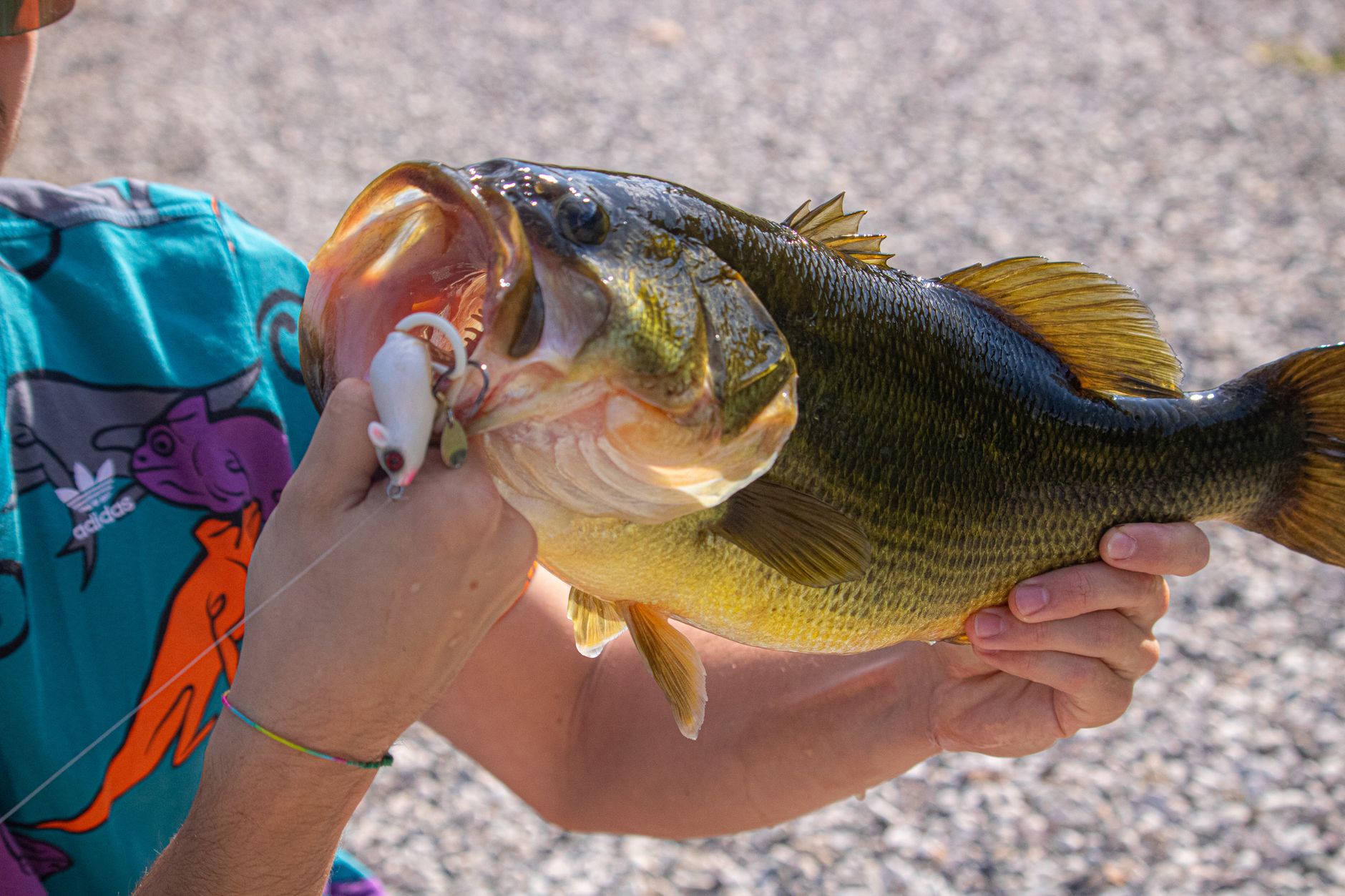
Bass fishing has always had its fads, but nothing has moved as fast — or looked as strange — as the bait sweeping tournament results in 2026. Anglers are calling it the Coike, and to the uninitiated it resembles a hairy golf ball more than anything a largemouth would ever eat.
The lure is a sea-urchin-shaped lump of soft plastic, its rubbery spines radiating in every direction. It was designed in Japan by tackle maker Hideup for that country's pressured, hard-to-fool bass. In American lakes it imitates nothing at all — and that may be the point.
This spring the bait went on a tear. Inside four weeks, urchin- and dice-style lures carried three major wins. Canadian pro Chris Johnston won the Bassmaster Elite Series stop at South Carolina's Santee Cooper Lakes with a 113-pound, 12-ounce total, runner-up Brandon Palaniuk leaning on the same style. Alex Davis pocketed $100,000 at the Lay Lake NPFL on one. Days later, Jason Christie locked up his 10th Bassmaster Elite victory with a rod deck full of them.
Why bass crush a bait that looks like a virus come to life is anyone's guess. "It's stupid how good they eat it here," angler Ridge Faircloth said after winning a Toyota Series event on Lake Seminole, telling In-Fisherman that nothing in his box came close.
There are theories. The spines fan out as a fish approaches, mimicking a creature puffing up in self-defense and provoking a strike. The dense profile also shows up vividly on forward-facing sonar. In-Fisherman columnist and former pro Joe Balog sees it as the newest member of a club — the Slug-O, the Senko, the ChatterBait — of lures that thrive precisely because they resemble nothing natural.
Skeptics question whether the bait is as magical as the results suggest. Sports Illustrated's Kurt Mazurek wondered aloud whether the wins reflect the lure or the herd. "I can't help wondering if the Coike was genuinely the best bait in all of those situations, or was it the most popular?" he wrote. "And because everyone was throwing it, is its success a self-fulfilling prophecy?"
Davis answers that with his own preparation. "I got my first Coikes last fall," he told Mazurek. "I tried them a couple times but didn't really have any success. Then this spring, once I had some big schools of bass located, I thought I'd take the opportunity to see if I could figure out how to fish it to trigger bites." He won mostly without forward-facing sonar — "just throwing it like a good old bass lure," he said.
He also expects the hype to cool. "I think it will still have a place in my bait lineup for the next 20 years. I picture it like a wacky worm," Davis said. "There will still be a time and place every year where the Coike will be a great choice, it just won't be the only choice all the time, like it is at the moment." Today's saturation, he noted, is its own undoing: "anything that shines for a tournament or two gets elevated and beat to death pretty quickly."
The demand has outrun supply. Usually around $20, the bait has all but vanished from shelves, and unopened packs have sold on eBay for as much as $284.98. Berkley, Yamamoto, Hag's, Arsenal and 6th Sense have all rushed knockoffs to market.
The looming question is whether tournament organizers will move to restrict it. Mazurek points to the banned Alabama Rig and the unresolved feud over forward-facing sonar. Davis finds the idea baffling. "Honestly, I still don't understand why the Alabama Rig was banned," he said. "I suppose like everything these days, there will be someone who got beat by someone using a Coike and they'll start a campaign to get them banned. So I won't be surprised, but I don't think it makes any sense."
The Coike carries none of the usual red flags — no extra hooks, no costly electronics, no clear harm to fish. The more likely ending is quieter: pressured bass learn the trick, and the bait settles in as one option among many. In Mazurek's words, give it 20 years and it will be "just another wacky worm."